By ten in the morning on a Sunday, the grass at Margaret Pace Park is already lined with tents, and the smell of empanadas and fresh-pressed juice drifts out toward Biscayne Bay. Dogs work the crowd for scraps. A vendor sells flowers she cut that morning. None of this existed at this scale a year ago, and it didn't arrive because a developer wanted an amenity photo for a sales deck. It arrived because one of Edgewater's own small business owners decided the neighborhood needed a place that wasn't a lobby, a rooftop pool, or a private amenity floor.
That distinction matters more than it sounds. Miami has plenty of farmers markets. What makes the one at Margaret Pace Park worth understanding, if you already live under one of Edgewater's towers, is what it was built to do beyond selling produce and pastries.
The Woman Who Built It
Lucia Martinelli left Milan for Miami in 2015 with a plan to open a food truck. Two years later, she and co-founder and chef Juan Peñaloza launched Made in Italy in Edgewater, serving Neapolitan style pizzas, Angus beef burgers, and empanadas that combined her culinary background with his Venezuelan training. Martinelli described the menu as an artful blend of Italian and Venezuelan cuisine, and the truck became her introduction to running a food business in a city that isn't always generous to new entrepreneurs.
That experience is what eventually produced the market. Martinelli began organizing her own pop-ups under the name East Coast Marketplace, and in 2025 she partnered with Damian Pardo, the Miami city commissioner representing District 2, and the City of Miami to launch the Margaret Pace Park Farmers Market. She lives in the neighborhood herself, and she has been clear that the goal was never simply to fill a park with tents on a Sunday.
"This is not just a farmers market, it's a community platform," Martinelli has said.
What Sets It Apart
Walk the rows on a Sunday and you'll find the usual mix: hot food, fresh baked goods, healthy snacks, artisanal products, wellness brands, pet-friendly items, and a rotating cast of more than 50 vendors between 10 a.m. and 6 p.m. Craave House, a micro-bakery, is a regular. Live music plays somewhere near the water most weeks. It's free to attend and open to dogs, which matters in a neighborhood where a good share of residents are walking a leash before they're walking anywhere else.
What you won't find at most Miami markets is the structure underneath it. Nonprofit organizations get free booths every week, a deliberate decision Martinelli has framed as a market giving back rather than only taking a cut. There's also the Young Makers Hub, a program that gives children free space to create, display, and sell their own products, which means the market is quietly training the next generation of Edgewater vendors before they're old enough to sign a lease. For some of the small businesses that show up week after week, Martinelli has said the income isn't supplemental. It's what keeps the operation running.
That's the piece that separates this market from a weekend pop-up with good branding. It functions as something closer to informal small-business infrastructure in a city where rising costs and limited access to brick-and-mortar space make it hard for a new food concept or a first-time maker to get traction.
The Rest of the Week
Sunday isn't the only day Edgewater's calendar has filled in. A Friday evening pop-up now runs along Bayshore Drive from 4 to 9 p.m., with food vendors and artisan goods set up right along the water as the sun starts to drop. It's a shorter, quieter version of the Sunday market, timed for people getting off work rather than people planning a whole morning around it.
If you're willing to go a few minutes north into the MiMo District, Saturday adds a third option at Legion Park, where the Urban Oasis Project has run a market since long before Edgewater's own market existed. Tents stretch from Biscayne Boulevard to the bay under a canopy of Spanish oak-draped banyan trees, and the produce side leans harder into actual farms, with growers like Little River Cooperative and French Farms selling what they picked that week. It's not part of Edgewater proper, but it's close enough that plenty of residents treat the two markets as bookends to the same weekend.
Strung together, the week now looks like this for anyone living between the bay and Biscayne Boulevard:
- Friday, 4 to 9 p.m. Bayshore Drive pop-up, food vendors and artisan goods along the water.
- Saturday, 9 a.m. to 2 p.m. Legion Park Farmers Market in MiMo, produce-forward, with free yoga most mornings.
- Sunday, 10 a.m. to 6 p.m. Margaret Pace Park Farmers Market, the largest of the three, with live music and the widest vendor mix.
None of that existed as a set a year ago. It exists now because one resident decided the gap was worth filling.
What This Is Actually Filling In
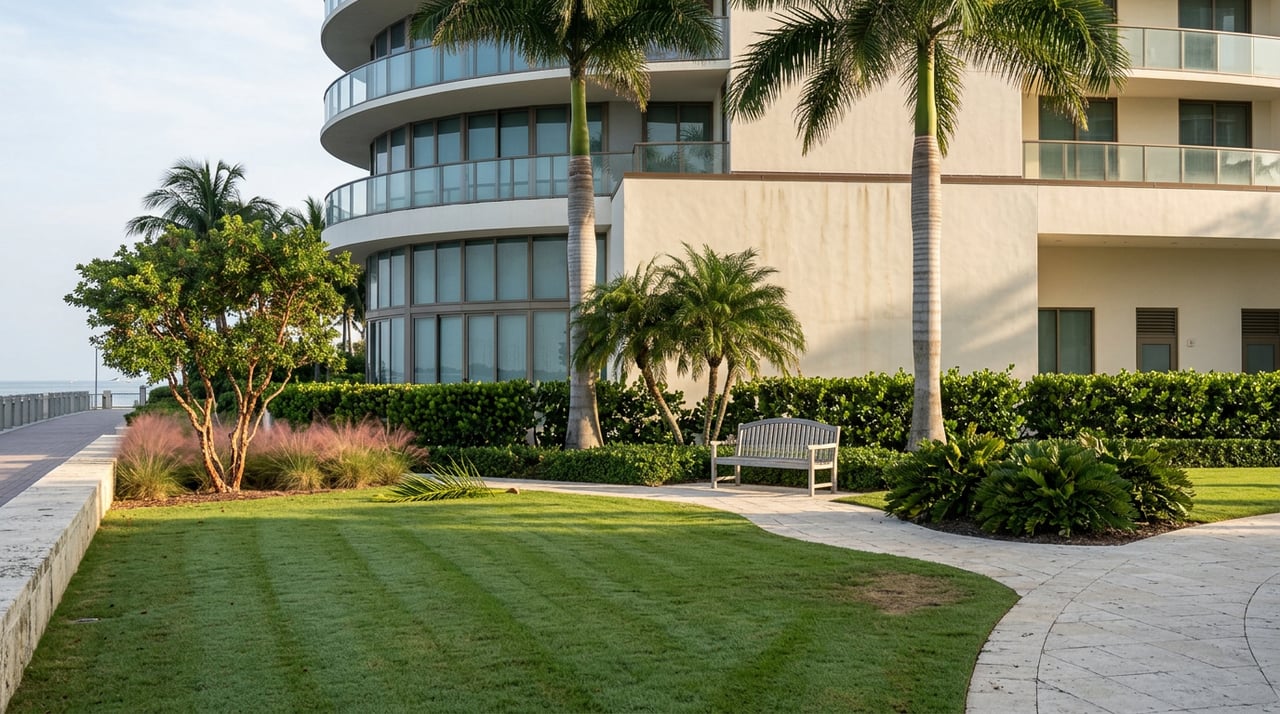
Edgewater has spent the past decade turning into a corridor of glass towers, and the towers bring real advantages: bay views, private amenities, elevator access to your own front door. What they don't automatically bring is a reason to run into your neighbors on a Tuesday. Martinelli has described the market's role in those terms directly, noting that the setting offers a kind of relief in a high-rise heavy neighborhood where life above the tenth floor can feel disconnected from whatever is happening at street level.
That's the actual thesis worth sitting with if you already live here. The market isn't a nice extra bolted onto Margaret Pace Park's existing amenities. It's doing work the buildings themselves can't do, turning a strip of green space that's been a neighborhood fixture since the 1960s into the closest thing Edgewater has to a town square, a place where a kid can sell friendship bracelets next to a bakery next to a nonprofit table, all under the same tents, all facing the same bay.
If you've been treating Sunday as a day to leave the neighborhood for brunch somewhere else, it might be worth reconsidering what's already a short walk from your building.
Edgewater's identity is still being written, and the people writing the most interesting parts of it aren't always the ones with the tallest cranes. If you're thinking about what life actually looks like in this neighborhood, on a random Tuesday as much as at closing, Susan Trevisa has spent years watching Edgewater change from the inside. Let's Connect.