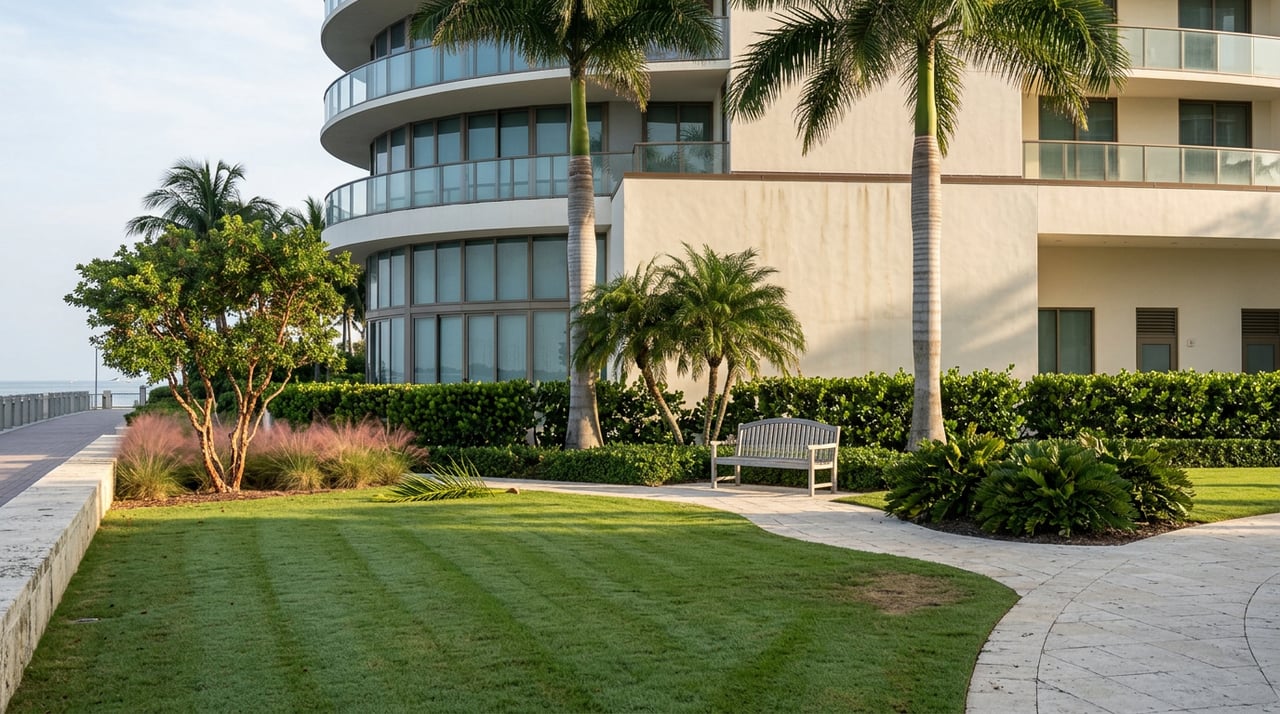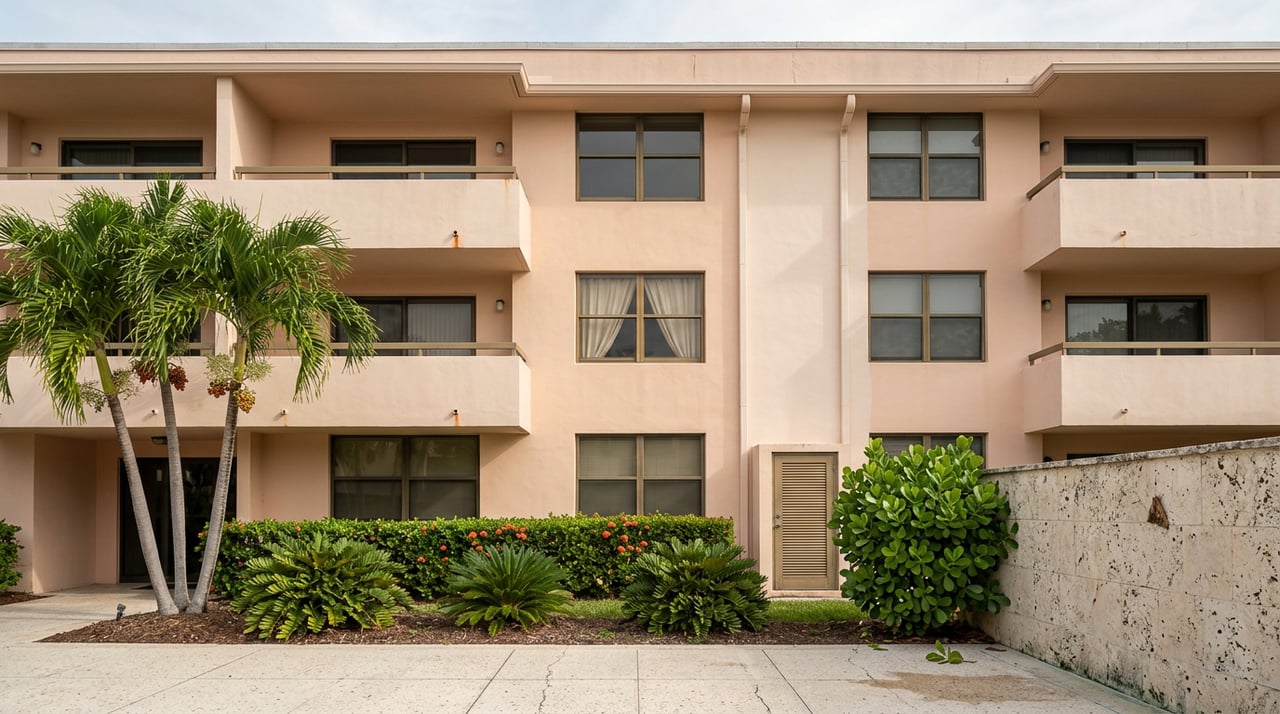
Three times in fourteen months, owners at the Mutiny on South Bayshore Drive opened a letter from a developer wanting to buy their building whole. First came DaGrosa Capital in December 2024, whose senior partner is Miami Mayor Francis Suarez. Then Slate Property Group and West Palm Beach developer Steven Figari offered $160 million in early 2025. Then, this January, BH Group's Isaac and Liat Toledano sent a third round of offers, also pegged around $160 million, aiming to lock up at least 140 of the building's 170 units. As of this writing, the Mutiny remains the one Grove landmark still working through an unresolved sale process, while the Ritz-Carlton and the Mayfair have both already changed hands this year.
If you own a condo in one of the Grove's older buildings, this is worth understanding in detail, not because the Mutiny's fate is settled, but because the mechanics behind it will decide what happens the next time a letter like this lands in your mailbox.
The Vote Is the Product
A bulk buyout is not a sale in the way most owners picture one. It is a termination of the condominium under Florida Statute 718.117, and the threshold that matters is not unanimous consent. It is 80 percent of the total voting interests. If 5 percent or more of owners formally object, the plan cannot proceed. That single number, 80 versus 5, is what every buyout campaign is built around, and it explains behavior that otherwise looks strange.
At the Mutiny, BH Group structured its approach around exactly this math, seeking signed contracts from roughly 82 percent of the building's 170 units rather than courting all of them equally. According to the developer's sales agent, individual offer amounts were tied to each unit's ownership percentage as recorded in the condominium documents, a figure that weights toward larger units and better views. That sounds like it rewards the owners with the best product. In practice it created a strange incentive: once a developer has enough favorably weighted votes locked up, there is no financial reason to pay a premium to chase the remaining holdouts, even if those holdouts have the best units in the building. One owner who has lived through this process at the Mutiny pointed out the logic plainly in a public comment: why would a buyer offer top dollar for a penthouse vote when smaller, cheaper units get you to 80 percent just as fast?
That is the part most owners do not learn until the letter is already in their hands.
The Same Building, Three Offers, One Pattern
Here is how the Mutiny's buyout attempts have unfolded so far.
| Timing | Buyer | Offer | Outcome |
|---|---|---|---|
| December 2024 | DaGrosa Capital | Not fully disclosed; excluded two commercial spaces | Did not close |
| February–March 2025 | Slate Property Group / Steven Figari | $160 million | Did not close |
| January 2026 | BH Group | Approximately $160 million | Active, unresolved as of August 2026 |
Two things stand out across all three rounds. First, the price has hovered around the same number even as the buyer changed, which suggests $160 million is closer to a market ceiling than a starting bid. Second, none of the three has closed, despite one Mutiny resident and real estate agent estimating in early 2025 that offers were running roughly 40 percent above what some units could fetch on the open market. Redfin estimates cited at the time put Mutiny units anywhere from about $400,000 for a 650-square-foot one-bedroom to more than $2.4 million for the penthouse. A 40 percent premium over those numbers is real money, and it still was not enough to get every developer to the finish line.
That gap between "generous offer" and "closed deal" is the story. It is not that owners are being lowballed. It is that getting from a strong offer to 80 percent signed contracts, without triggering a 5 percent objection, is genuinely hard, especially in a building where, as one longtime resident who ran the property's onsite restaurant put it, no payout may be enough to find something comparable in the same neighborhood. A unit owner who bought his one-bedroom in 2005 for $235,000 after renovating the kitchen and bathrooms said flatly that he would not sell for less than top dollar. Multiply that sentiment across 170 deeds, some owned by investors eager to cash out and some by full-time residents who consider it home, and you get exactly the kind of standoff that has now repeated three times.
Why This Is Happening in the Grove Now
None of this is really about the Mutiny's history as a 1970s hotspot for cocaine-era Miami. It is about the building's age. Built in 1968 and converted to condominium-hotel use in 1998, the Mutiny falls squarely into the category of South Florida buildings now facing mandatory Structural Integrity Reserve Studies and milestone inspections under the state's post-Surfside reforms. Associations three stories or taller can no longer waive reserves for structural components, and full funding requirements phased in through 2025 and 2026 have made deferred maintenance in older towers a line item that shows up in every closing, not a problem the next owner can quietly inherit.
That pressure is not unique to the Mutiny. Coconut Grove's older condo stock, buildings like Grove Towers from 1982, the corner-unit-only Grove Hill Tower from 1996, Kenneth Treister's hexagonal Yacht Harbour from 1975, the ten-unit Beacon Harbour, and Grovenor House on South Bayshore, all carry the same structural clock. Recent market reporting on the Grove has noted that pre-2000 condo buildings without a clean milestone inspection and completed reserve study are selling 15 to 25 percent below recent closed comps, a gap buyers now build into every offer before they ever tour the unit. BH Group itself has already run this playbook once nearby, partnering with Mast Capital to acquire more than 75 percent of units at the 39-unit Bayshore Park condominium, half a mile from the Mutiny, for $20 million.
Put together, the reserve law did not just raise monthly dues. It made bulk buyouts financially rational for developers in a way they were not a decade ago, because the alternative for owners, funding a multimillion-dollar structural repair through special assessments, is now the real comparison point, not simply "sell or don't sell."
The Edgewater Case Every Grove Owner Should Know
One nearby precedent matters more than it might seem. At Biscayne 21 in Edgewater, a 192-unit building at 2121 North Bayshore Drive, developer Two Roads Development tried to lower the termination threshold in the building's declaration from 100 percent to 80 percent by amending the governing documents. Florida's Third District Court of Appeal reversed that move, and in January 2026 a Miami-Dade Circuit Court judge ordered the developer to restore the building, at an estimated cost of $65 million over two years, rather than allow the termination to proceed. The ruling turned on one detail: Biscayne 21's original declaration, recorded before the 2007 statutory change, required unanimous consent, and a court found that could not simply be amended away.
Attorneys who work on these cases note that this unanimous-consent language is common in buildings thirty years and older, which describes a meaningful share of the Grove's condo stock. Before signing anything, or before assuming your building can be bought out at all, it is worth knowing what your own declaration actually requires. Some Grove buildings may need every single owner to agree. Others default to the statutory 80 percent. That difference changes your leverage entirely.
What to Actually Verify Before You Sign
If a buyout letter arrives, the number on the page is the least useful piece of information in it. What matters more:
Your building's declaration language on termination, specifically whether it requires 80 percent or something higher, since courts have shown they will enforce stricter original terms even against a developer's amendment attempt.
Whether you have homestead status or occupy the unit as an owner-operated business, since Florida law sets a fair market value floor in those cases of at least your original purchase price, regardless of what the bulk offer calculates.
The building's current milestone inspection and reserve study status, since a building already facing a large special assessment gives a developer more leverage, not less, in convincing owners to take a buyout instead of paying for repairs themselves.
How close the developer already is to 80 percent, since an early, generous offer to you personally may simply reflect that your unit's vote weight is the one still missing, not that your unit is uniquely valuable to their plans.
None of this means a bulk offer is a bad outcome. For an investor-owner facing years of assessments in an aging tower, it can be the better math. For a full-time resident who values the address more than the payout, understanding the actual threshold and your building's specific declaration is what turns a stressful surprise into an informed decision.
A Few Direct Questions
Does a buyout letter mean my building is definitely being torn down? No. All three Mutiny offers included redevelopment plans, but none has closed. A letter starts a process that requires 80 percent signed agreement and no more than 5 percent formal objection. Many proposed buyouts stall before reaching that threshold.
If I have homestead exemption on my unit, does that protect me? It affects your price floor. Florida law requires that homesteaded and owner-occupied business units be compensated at least the original purchase price in a termination, which is a different calculation than the ownership-percentage formula developers often use for other units.
Is this only a Mutiny problem, or could it happen at other older Grove buildings? The same reserve and inspection pressures apply to any Grove condominium three stories or taller built before the mid-1990s. Whether a buyout is realistic there depends heavily on that specific building's declaration and how close a developer could realistically get to the required vote threshold.
If you own in one of the Grove's older buildings and want a clear read on where your building actually stands, from reserve funding to inspection status to what your declaration says about termination, Susan Trevisa can walk through the specifics with you before any letter changes the conversation for you.